
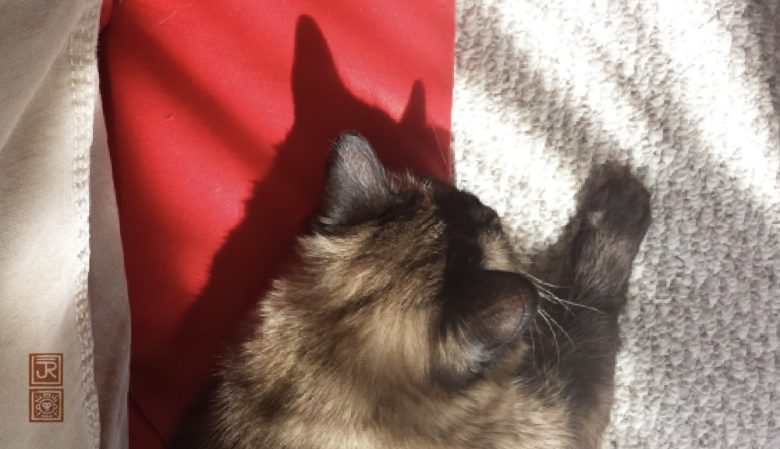
When we first start meditating, the mind is like a young kitten—scampering off, chasing butterflies, getting distracted, tipping over, getting hungry, bumping into walls. And each time it wanders, we hold it gently, and kindly invite it back into our lap.
Back to the body.
Back to the breath.
Back to this moment.
This way of seeing helps us relate to the mind as something natural, something alive, something we want to snuggle and would never be angry at or mean to. We can see our own mind as something we can relate to with kindness, curiosity, joy and maybe even a little humor. The kitten isn’t doing anything wrong—it’s just being a kitten. Its wandering isn’t a mistake; it’s part of its nature. And each return is a small act of trust, a reminder that the lap is always here.
As we continue practicing, that tender, wandering kitten begins to mature. Over time, it develops the claws of prajñā—the sharpness of insight—and the steady awareness of a hunter. A hunter of what? A hunter of Dharma, seeking the truth woven into the fabric of reality.
Eventually, the mind becomes like a tiger in its prime—moving through the jungle without fear. It knows how to be content with its situation, and contentment is the key. It knows it is well equipped with discernment. It knows it belongs. It walks with confidence, strength, and resilience.
In these ways, the mind is a cat.
When we relate to the mind this way, something softens. We stop treating our thoughts as enemies or obstacles and start recognizing them as part of a living, tender creature that’s learning how to stay close.
…
By the way, if you’re a dog, bird, or lizard person, you can swap in the cute baby of your choice.